Lean Manufacturing Questions Answered
- How can Lean Manufacturing help my business if it's not a manufacturing business? The 'Lean' principles apply to ANY business, whether Manufacturing or not. I recently was part of a six man team in an airline catering company that produced over $10,000,000 of savings in just 6 months. I personally have colleagues who work in the Financial sector applying exactly the same tools and techniques as they did in Mfg and getting even better results because the processes are much simpler. What you need to remember is that 'Lean' deals with mainly two things - People and Processes (Machines would be included in the processes) So any businesses that has people and processes can be improved using 'Lean' methodology. I haven't yet come across an industry that CAN'T be improved with 'Lean' ! There are also 'Lean' initiatives being set up in many other industries around the world at the moment, for example in the UK the National Health service, The Royal Mail, Local Government agencies to name but a few are going down the 'Lean' road.
- Why would I want to use Lean Manufacturing if my business is making money already? Why leave money on the table? If you are already making money without applying 'Lean' then you are more than likely leaving cash on the counter. Additionally, how long will it be before your competitors catch up or even overtake you. Imagine if they started to make the same product to a better quality standard at a third of the cost to them - especially if you're competing against companies in the emerging markets of China and India. How long would it be before your market share took a nasty dip? You either move forward and improve or you will begin to decline. The laws of the universe do not allow for standing still (Not for very long anyway!)
- How does Lean Manufacturing actually improve my bottom line? There is something called 'The Essential Business Equation' in which there are three parts - Costs, selling price and profit. Obviously your profit is determined by your selling price minus your costs. The only one of these two you can have any effect on is the costs, because the selling price to a greater or lesser degree is determined by the market (You can't suddenly put a retail price of $100,000 on a two door family saloon car because you want to make more profit ! The market just won't buy.) So the only one you can really take control of is your costs. Reduced costs = Increased profits. 'Lean' methodology concentrates on reducing 'Waste' in the operation to reduce costs so that the work that is done is more closely aligned to what the customer is actually willing to pay for.
- We tried some of these improvement fads before and they didn't work, why should I try Lean Manufacturing? ALL improvement methodologies will fail if the management commitment isn't there. 'Lean Manufacturing' requires that ALL workers from the CEO to the guys on the front line change the way they operate. If the guy at the top isn't willing to walk the walk and lead by example, then your road to 'Lean' will be a very slow one and you may well be out of business before you get there! If however, the guy at the top is on board and actively waving the flag and leading by example, your business will flourish and prosper and you'll leave your competitors eating your dust !
- My people are already working flat out and doing overtime, but we still can't keep up with orders. How can Lean Manufacturing help me?
Lean Manufacturing Overview Presentation - Left Click To View, Right Click To Download
- Some of the real basic 'Lean' diagnostic tools will very quickly identify what your production rate needs to be along with the ideal number of workers. The application of working to 'Takt Time' and a simple rebalance of the working processes could be all you need to get more work out with less employees and no overtime. Every situation is different obviously, but a good Value stream map will very quickly let you see where your bottlenecks and main areas of waste are (AND they probably aren't where you think they are!)
Waste is the use of any material or resource beyond what the customer requires and is willing to pay for.
Lean Manufacturing aims to identify and eliminate waste to improve the performance of the business.
There are seven wastes and they are as follows;
Lean Manufacturing 7 Wastes
OVERPRODUCTION
e.g. making it for the sake of it
INVENTORY
e.g. high raw material stocks
WAITING
e.g. long set ups and times
MOTION
e.g. walking lifting putting down
TRANSPORTATION
e.g. unnecessary movement / extra handling
REWORK
e.g. customer satisfaction / right first time
OVERPROCESSING
e.g. fresh air cutting / speeds and feeds
o The 8th Waste of Lean Manufacturing - Under utilisation of people. People are your greatest asset, learn to get the best out of them.
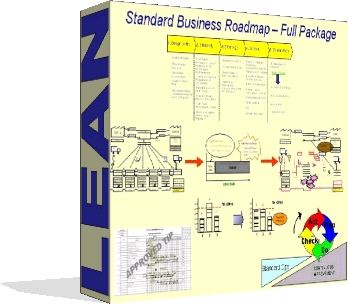
- How can I learn how to implement Lean Manufacturing without paying out $$$$thousands on consultants? In this package is a step by step guide to implementation - Read it, apply it - Don't worry about getting it right, just get it going. The worst thing you can do is - Nothing. If you keep doing what you've always done you'll keep getting what you've always got. The things you are currently doing that got you into the situation you are currently in are NOT the things that will get you out of it. Learn, understand, apply and if you get stuck, we are only an email away.
o Lean should be recognised as a totally different way of looking at working. It’s about attacking waste; the massive areas in the value stream (overall process), from raw material to finished goods, where no added value is taking place.
‘Lean thinking’ first appeared in the 1920s Henry Ford used it to improve his manufacturing flow lines while producing his famous Ford model T.
He used it to rid his company’s production lines of all waste, be it an activity or other form of waste, so he could meet his vast order schedule. Lean carried on in its infant form up to the seventies, where the global oil crisis demanded that petrol-guzzling engines, (that Ford had become used to making), be replaced by economical smaller engines.This is when lean was adopted by Japan and the Toyota car company. Here it was refined to the present standard we are accustomed to - The Toyota Production System.
So what is ‘lean’? As already stated it’s the removal of waste from our business.
But just removing waste only is not enough, so that’s where the other lean principles come into practice.
They cover all aspects of production in any environment and can be used by anyone who wants to improve his or her working environment and production processes.
LEAN THINKING AIMS
QUALITY
Built in quality
Zero defects / PPM
Route cause analysis
Everybody involved
COST
Increased capacity
Capital spend reduction
Optimised inventory level Productivity increase.
DELIVERY
Drumbeat manufacture
Reliable and consistent
Responsive to fluctuation Lowest possible lead-time
o MANUFACTURING TRADITIONAL FOCUS:
WORK HARDER FASTER FOR LONGER
LEAN APPROACH:
IMPROVE THE PROCESS TO ELIMINATE WASTE AND TO WORK SMARTER / SAFER - THIS IS THE AIM OF LEAN MANUFACTURING